Brand Tracking for B2B: The Essential 2026 Guide
Learn how B2B brand tracking drives growth in 2026. Discover key metrics, tools, and strategies to monitor brand perception and outpace competitors.

If you're relying on quarterly surveys and gut feelings to measure your B2B brand's health, you're flying blind in a market where brand perception decides who makes the shortlist before buyers ever show intent.
The hard truth? According to Forrester research, B2B brand measurement is fundamentally broken. While marketing teams chase performance metrics and conversion rates, the biggest growth engine for business (your brand) is being neglected, misunderstood, and grossly undervalued.
Here's what the data reveals: 41% of B2B buyers begin their purchase journey with a single preferred vendor already in mind, while over 90% have a shortlist before they ever engage with sales. Where do those preferences come from? Your brand.
Yet only 31% of B2B companies run an annual brand tracker, and just 30% believe they can effectively measure how brand impacts demand or sales.
This guide breaks down everything you need to build a modern B2B brand tracking program that actually drives revenue, from the core metrics that matter to the AI-powered tools transforming how brands monitor perception in real time.
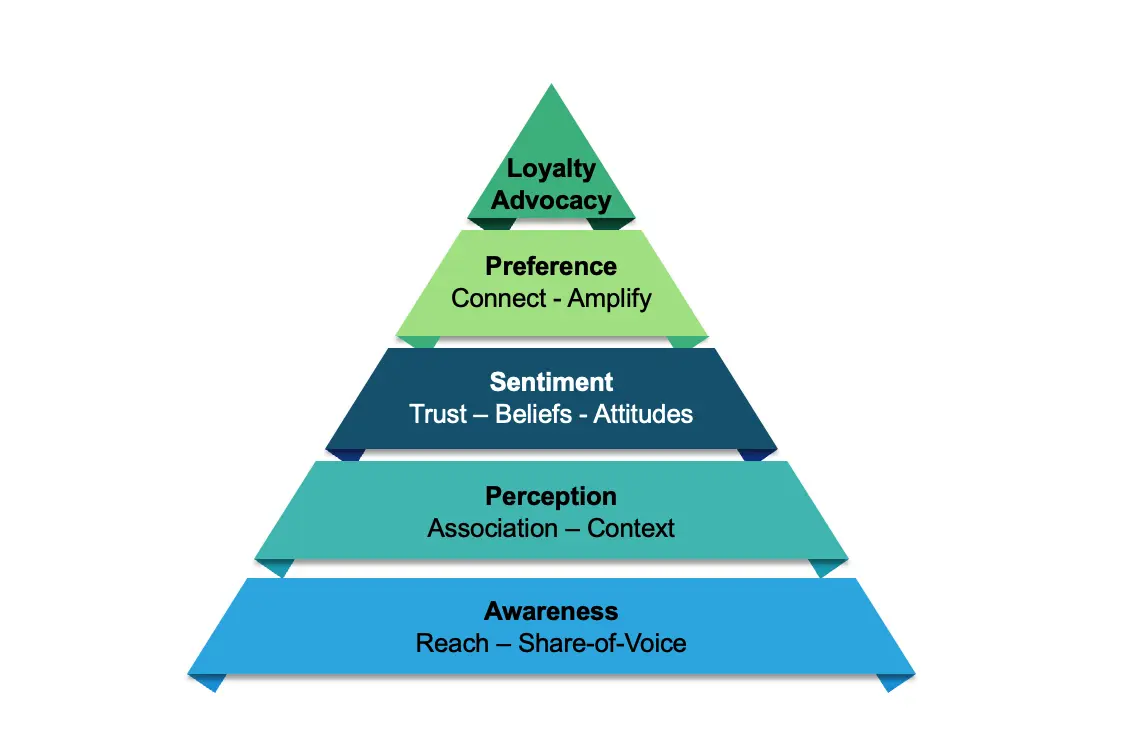
Source: Forrester
What Is Brand Tracking (And Why B2B Companies Can't Ignore It)
Brand tracking is the systematic process of monitoring how your target buyers perceive, recall, and prefer your brand over time. It measures the health of your brand across key dimensions like awareness, sentiment, preference, and loyalty.
For B2C brands, brand tracking often focuses on consumer sentiment and purchase intent. But B2B brand tracking operates in a completely different context. Your buyers are professionals making complex, high-value decisions with multiple stakeholders involved. They're evaluating you months before they ever fill out a form or request a demo.
The cost of ignoring B2B brand tracking is steep:
- You lose before the game starts: When buyers shortlist vendors, brand familiarity and trust determine who makes the cut. Without tracking, you don't know if you're even being considered.
- Performance marketing underperforms: Intent-based campaigns can't save you if buyers have never heard of you or associate your brand with the wrong attributes. According to HubSpot's 2025 State of Marketing Report, website, blog, and SEO efforts (driven by brand recognition) are the top ROI channels for B2B brands.
- You can't prove marketing's value: Leadership demands proof that marketing drives revenue. Brand tracking connects brand health to pipeline quality and sales velocity, giving you the business case you need.
The reality is simple: your brand isn't just a logo or a tagline. It's a decision driver that determines whether buyers consider you, shortlist you, and ultimately choose you.
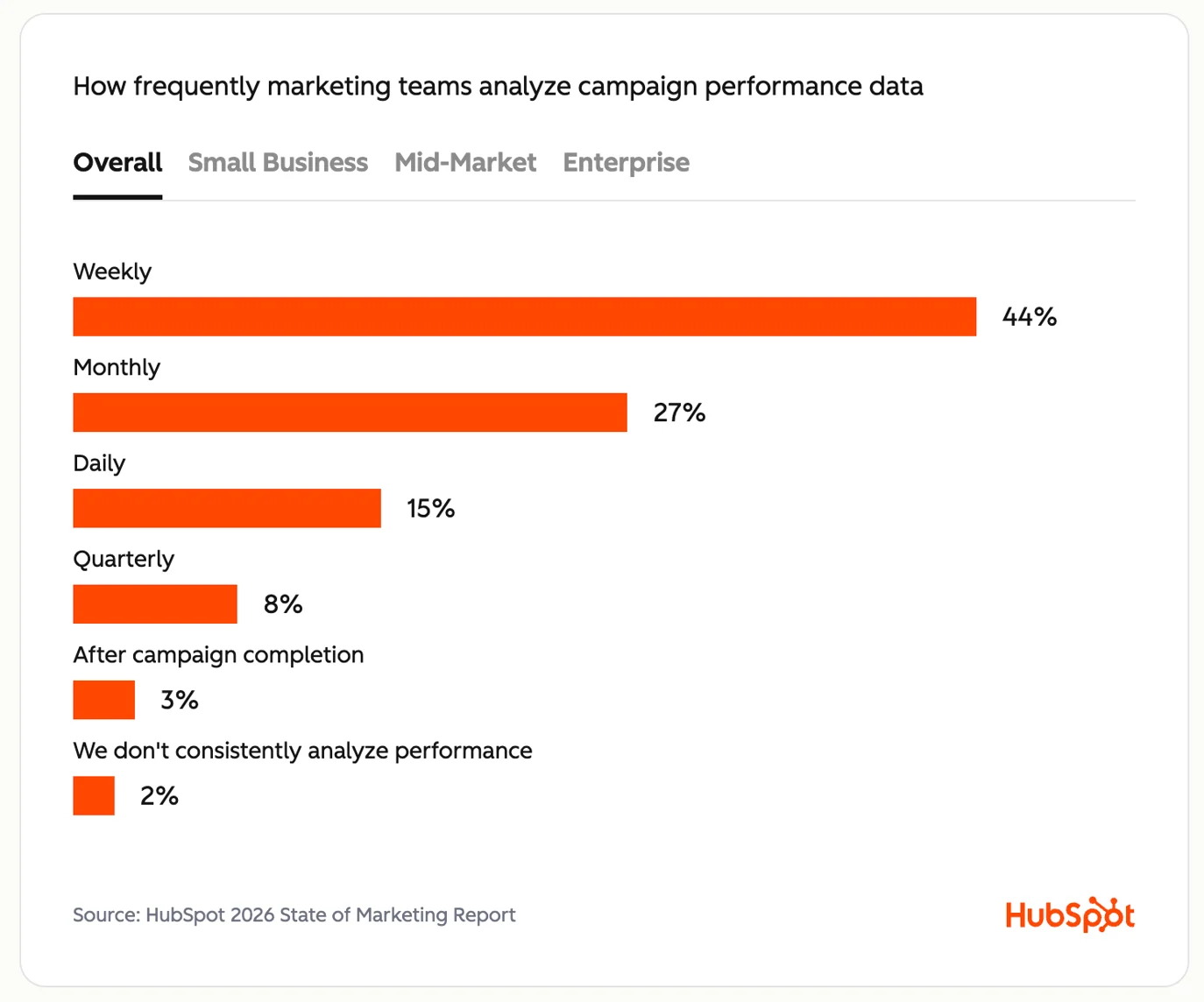
Source: Hubspot
Core Brand Tracking Metrics Every B2B Team Should Monitor
Not all brand metrics matter equally. Here are the six core metrics that B2B teams should prioritize:
1. Brand Awareness
Brand awareness measures how many people in your target market know your brand exists. It breaks down into two categories:
- Unaided awareness: Can buyers name your brand without prompting when asked about solutions in your category?
- Aided awareness: Do buyers recognize your brand when they see your name or logo?
Unaided awareness is the gold standard because it means you're top of mind when buyers start their search. According to research from Wynter, buyers who name your brand unprompted are significantly more likely to shortlist you.
2. Brand Sentiment
Sentiment tracks how people feel about your brand (positive, negative, or neutral). In B2B markets, sentiment is shaped by product experience, customer support, thought leadership content, and even what your CEO posts on LinkedIn.
AI-powered sentiment analysis tools now go beyond simple positive/negative labels. Modern platforms like Trigify.io analyze nuanced emotions and context to understand how people really feel about your brand.
3. Share of Voice
Share of voice measures how much of the conversation in your category belongs to your brand compared to competitors. It's calculated by dividing your brand mentions by total category mentions.
A rising share of voice signals growing mindshare. It means more people are talking about you relative to your competitors, which correlates directly with brand strength and future market share.
4. Brand Recall
Brand recall measures how quickly and easily buyers think of your brand when they have a specific need. It answers the question: When a buyer experiences the problem you solve, does your brand come to mind?
This metric is especially critical in B2B, where buying cycles are long and buyers conduct extensive research before engaging with vendors.
5. Net Promoter Score (NPS)
NPS asks one simple question: "How likely are you to recommend our product/service to a colleague?" Respondents answer on a 0-10 scale, and you calculate your score by subtracting detractors (0-6) from promoters (9-10).
While NPS is commonly used for customer satisfaction, it doubles as a brand loyalty metric. High NPS indicates strong brand advocacy, which fuels word-of-mouth growth in B2B markets.
6. Social Engagement Metrics
Social engagement (likes, shares, comments, saves) reveals how your brand content resonates. According to HubSpot data, 90% of social media marketers say building an active online community is crucial to success, and 89% of B2B marketers use LinkedIn for lead generation.
Track engagement rates on your owned content and monitor conversations about your brand across social platforms, particularly LinkedIn where 40% of B2B marketers say it delivers the highest-quality leads.
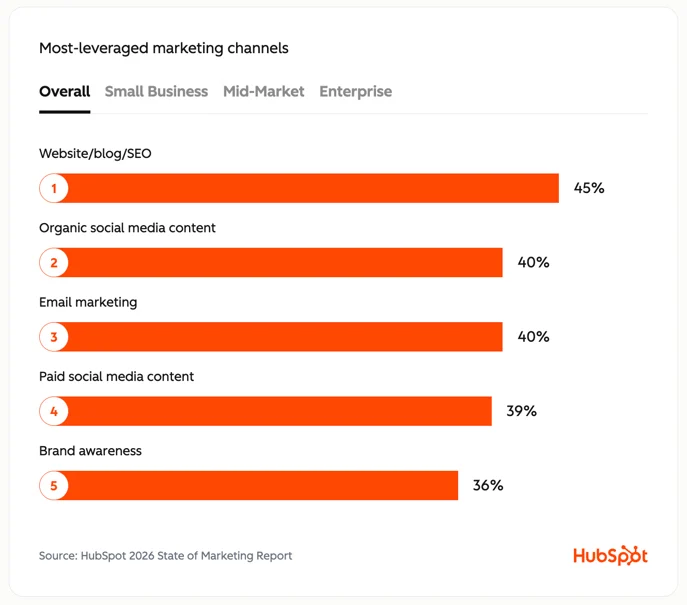
Source: Hubspot
Traditional Brand Tracking vs. Modern Social Listening
For decades, B2B brand tracking meant expensive quarterly surveys, annual studies from agencies like Kantar or Ipsos, and waiting weeks for insights. This approach had serious limitations:
The problems with traditional brand tracking:
- Too slow: By the time you get results from a quarterly survey, market conditions have changed.
- Too expensive: Annual brand studies can cost $50,000-$200,000+, putting them out of reach for most B2B companies.
- Limited sample sizes: Traditional panels struggle to reach niche B2B decision-makers, especially in specialized industries.
- Backward-looking: Surveys tell you what happened in the past, not what's happening right now.
As Forrester analyst Ian Bruce writes: "B2B brand measurement is fundamentally broken. Many B2B companies are flying blind when it comes to understanding how their brand is actually performing. Usually, there's no clear process, no reliable data, and no consistent framework."
The rise of modern social listening:
Modern social listening and AI-powered brand tracking tools have revolutionized how B2B companies monitor brand health. These platforms continuously scan social media, online news, forums, blogs, and review sites for brand mentions and conversations.
Key advantages of modern social listening:
- Real-time insights: See brand mentions, sentiment shifts, and conversation spikes as they happen.
- Always-on monitoring: Continuous tracking replaces quarterly snapshots with live brand health dashboards.
- Comprehensive coverage: Monitor LinkedIn (where 89% of B2B marketers generate leads), X, Reddit, industry forums, review sites, and news publications.
- AI-powered analysis: Modern tools use AI to analyze sentiment, detect anomalies, identify trends, and surface actionable insights automatically.
- Competitive intelligence: Track competitor mentions alongside your own to benchmark share of voice and sentiment.
According to HubSpot research, 30% of businesses will use AI-driven analytics tools to improve ROI by 2025, and the shift toward real-time brand intelligence is accelerating.
The best B2B brand tracking programs now combine both approaches: periodic surveys for deep attitudinal insights paired with always-on social listening for real-time market pulse.
How to Build a B2B Brand Tracking Program in 2026
Building an effective brand tracking program doesn't require a massive budget or dedicated research team. Here's how to get started:
Step 1: Set Clear Objectives
Start by defining what you want to learn and improve. Common B2B brand tracking objectives include:
- Measure baseline brand awareness in your target market
- Track brand sentiment before and after product launches
- Monitor share of voice against top competitors
- Identify brand perception gaps (how you want to be seen vs. how you're actually seen)
- Connect brand health metrics to pipeline and revenue outcomes
Be specific. Instead of "improve brand awareness," aim for "increase unaided awareness among IT directors at mid-market SaaS companies from 12% to 20% by Q4."
Step 2: Choose the Right Tools
Your tool stack should match your budget, team size, and tracking needs. Options include:
Survey-based tools for periodic deep dives:
- Wynter - Fast B2B feedback from verified professionals (24-48 hour results)
- Attest - Quality-focused with triple-validated responses
- Qualtrics - Enterprise-grade for complex multi-country programs
Social listening and monitoring tools for real-time tracking:
- Sprout Social - All-in-one social media management with AI-powered listening
- Mention - Real-time monitoring across social, news, blogs, and forums
- Brandwatch/Talkwalker - Enterprise listening platforms with advanced analytics
Specialized Signal-Based Social Listening tools with real-time tracking:
- Trigify - Agentic social listening built specifically for B2B teams, with AI agents that monitor LinkedIn and surface mention signals automatically
The right choice depends on whether you need rapid feedback loops (Wynter), always-on monitoring (Sprout Social, Trigify), or enterprise-level analytics (Qualtrics, Brandwatch).
Step 3: Establish Baselines
Before you can track progress, you need to know where you start. Run your first measurement to establish baseline metrics for:
- Current awareness levels (aided and unaided)
- Brand sentiment breakdown (positive/negative/neutral percentages)
- Share of voice in your category
- Key brand associations (what attributes buyers connect to your name)
- NPS scores from current customers
Document these baselines and revisit them quarterly or biannually to measure progress.
Step 4: Create a Reporting Cadence
Decide how often you'll measure and report on brand health. Most B2B teams use a hybrid approach:
- Always-on monitoring: Real-time social listening tracks daily mentions, sentiment, and conversation volume
- Quarterly pulse surveys: Short surveys (5-7 questions) measure awareness, preference, and perception shifts
- Annual deep-dive studies: Comprehensive research explores brand positioning, competitive landscape, and strategic opportunities
Build dashboards that visualize trends over time so stakeholders can see brand health improving (or declining) at a glance.
Step 5: Act on Insights
Brand tracking is worthless if you don't act on what you learn. Use insights to:
- Adjust messaging: If buyers associate you with the wrong attributes, refine your positioning
- Allocate budget: Invest more in channels and campaigns that drive positive brand lift
- Respond to crises: Catch negative sentiment spikes early and address issues before they escalate
- Inform product strategy: If buyers consistently mention competitor strengths you lack, prioritize those features
- Prove marketing ROI: Connect brand health improvements to pipeline growth and sales velocity
According to HubSpot, 87% of marketers report that data is their company's most under-utilized asset. Don't let brand insights gather dust in a dashboard.
[
](https://app.trigify.io/sign-up)
The Role of Social Listening in Real-Time Brand Intelligence
Social listening has become the backbone of modern B2B brand tracking because it captures authentic, unsolicited opinions in real time. Here's why it matters:
Monitor LinkedIn Where B2B Conversations Happen
LinkedIn isn't just a networking platform; it's where B2B buying decisions are influenced. According to HubSpot data:
- 89% of B2B marketers use LinkedIn for lead generation
- 40% say LinkedIn is the most effective channel for high-quality leads
- 62% of B2B marketers say LinkedIn produces leads effectively
Social listening tools monitor LinkedIn conversations to track:
- Direct mentions of your brand or products
- Competitor comparisons and competitive intelligence
- Industry trends and pain points your buyers discuss
- Thought leadership content performance
- Buying signals (posts where people ask for vendor recommendations)
Track Competitor Mentions for Competitive Intelligence
Brand tracking isn't just about monitoring your own brand. The most strategic programs track competitors to:
- Benchmark your share of voice against rivals
- Identify gaps in competitor positioning you can exploit
- Learn from competitor crises and customer complaints
- Spot when prospects are evaluating competitors
- Understand competitive strengths and weaknesses
Identify Buying Signals and Intent
Modern social listening tools use AI to detect buying signals in conversations. These include:
- Questions like "What's the best [category] tool for [use case]?"
- Posts comparing vendors or asking for recommendations
- Complaints about current solutions signaling potential churn
- Job changes that indicate new budget ownership
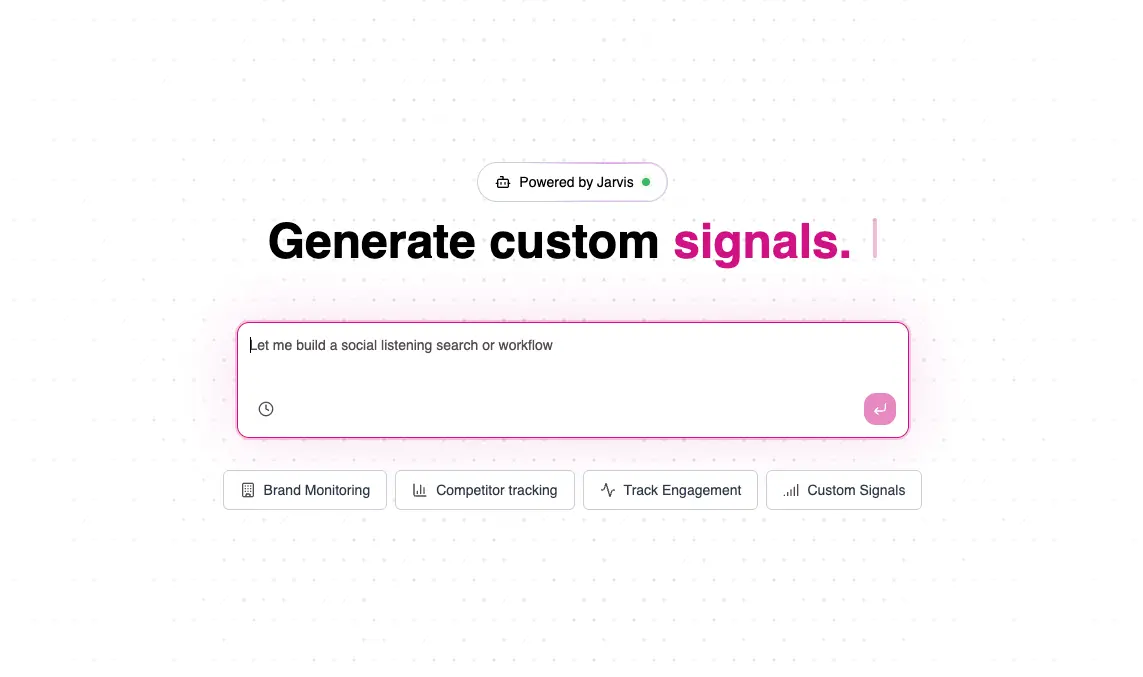
Platforms like Trigify take this further with agentic AI that automatically surfaces these buying signals, prioritizes them by relevance, and alerts your team so you can engage when it matters most.
Leverage AI Agents for Automated Insights
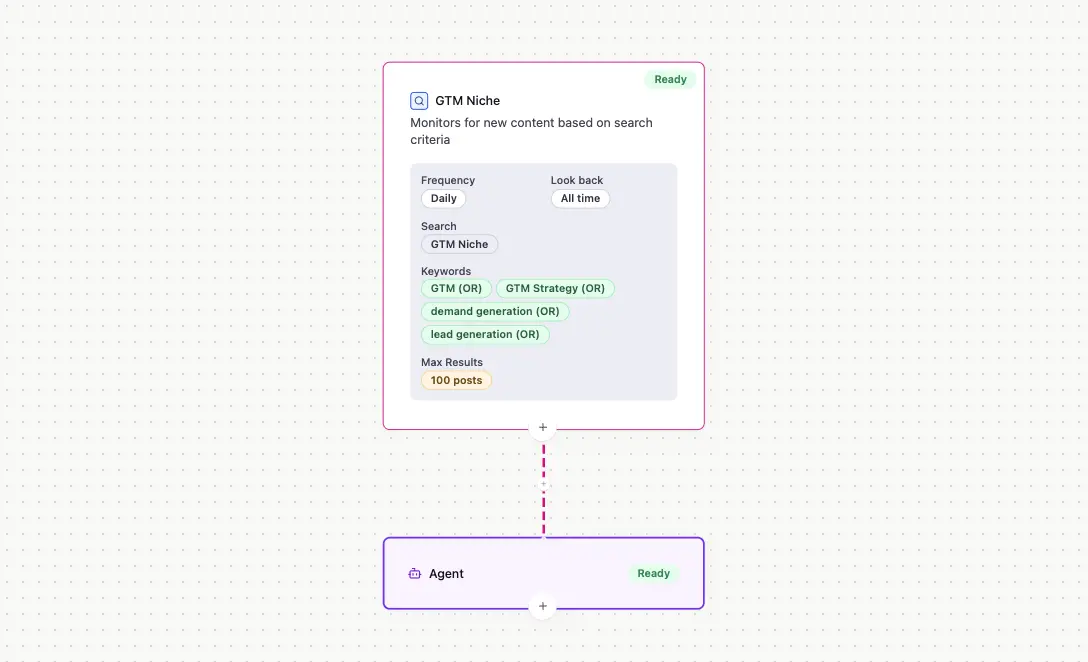
The newest generation of social listening tools uses AI agents to automate brand intelligence. Instead of manually filtering through thousands of mentions, AI agents:
- Automatically classify mentions by sentiment, urgency, and topic
- Detect anomalies and alert you to sudden spikes in volume or sentiment
- Surface trends and patterns you'd miss in manual analysis
- Generate automated summaries of brand health changes
Trigify's agentic approach means AI continuously monitors social conversations, learns what matters to your brand, and surfaces only the insights that require human attention or action.
[
](https://app.trigify.io/sign-up)
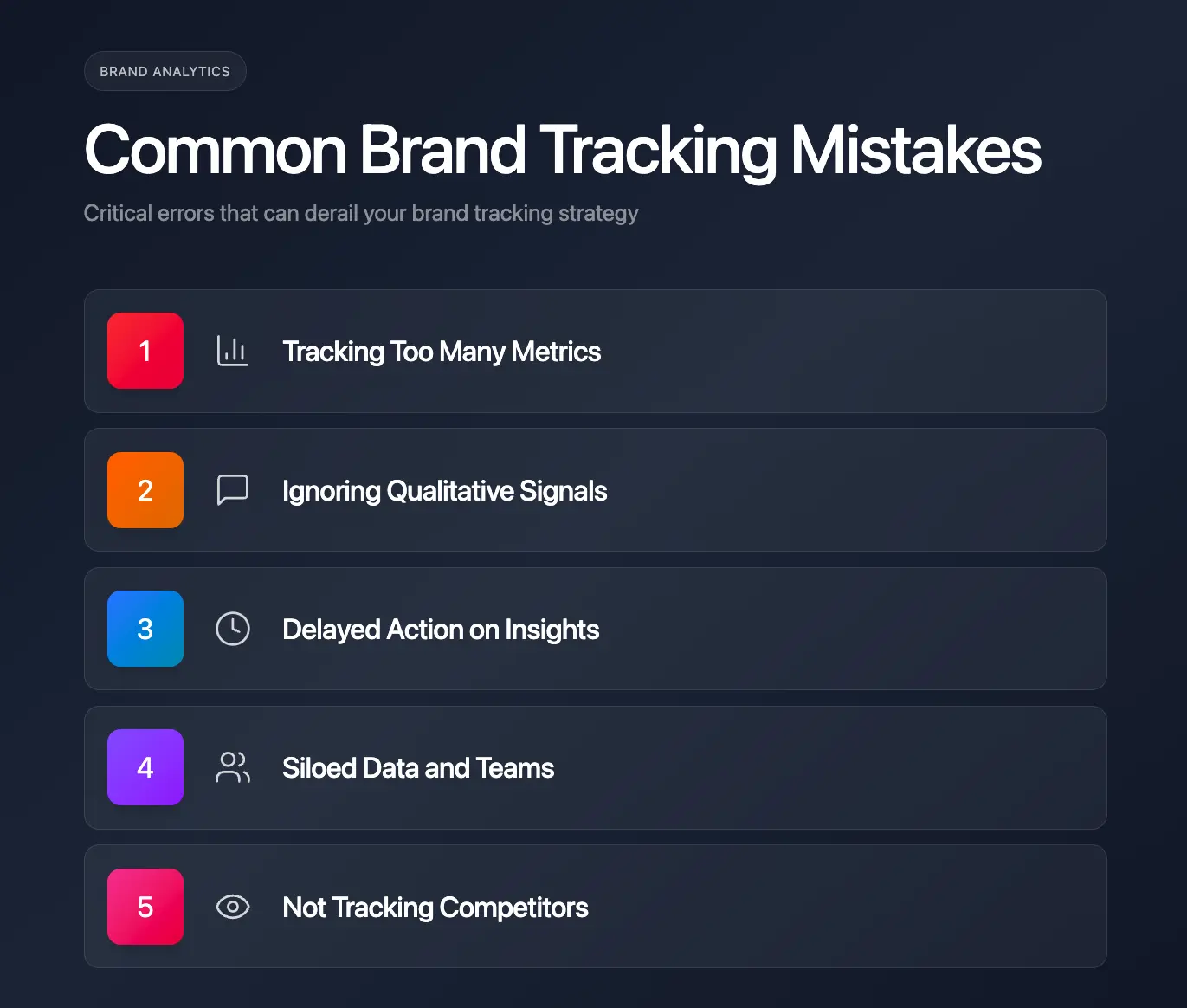
Common Brand Tracking Mistakes (And How to Avoid Them)
Even well-intentioned brand tracking programs fall into predictable traps. Here are the most common mistakes and how to avoid them:
Mistake 1: Tracking Too Many Metrics
The problem: You build a dashboard with 30+ brand metrics that nobody looks at because it's overwhelming.
The fix: Focus on 5-7 core metrics that directly tie to business goals. Start with awareness, sentiment, share of voice, and NPS. Add more metrics only when you have a specific reason to track them.
Mistake 2: Ignoring Qualitative Signals
The problem: You obsess over quantitative metrics (mention volume, sentiment scores) but ignore the actual conversations and context behind the numbers.
The fix: Regularly review raw mentions and conversations. Read what people actually say about your brand. Qualitative insights reveal why sentiment is shifting and what specific attributes buyers associate with you.
Mistake 3: Delayed Action on Insights
The problem: You run quarterly surveys, get results six weeks later, and by then the moment to act has passed.
The fix: Implement always-on monitoring with real-time alerts. Set up notifications for sentiment spikes, crisis triggers, and buying signals so you can respond immediately.
Mistake 4: Siloed Data and Teams
The problem: Brand tracking lives in a marketing dashboard that sales, product, and customer success never see.
The fix: Share brand insights across teams. Sales should know how brand awareness and preference are trending. Product should see customer sentiment about specific features. Customer success should track NPS and advocacy metrics.
Mistake 5: Not Tracking Competitors
The problem: You only track your own brand without competitive context, making it impossible to know if your 10% awareness growth is good (competitors grew 5%) or bad (competitors grew 25%).
The fix: Always track 3-5 top competitors alongside your brand. Compare share of voice, sentiment, and awareness to benchmark your performance.
According to Forrester, "B2B companies that fail to fix brand measurement will continue to misallocate resources, misjudge performance, and miss out on growth opportunities."
Don't let these avoidable mistakes undermine your brand tracking program.
[
](https://app.trigify.io/sign-up)
Take Control of Your Brand Narrative
B2B brand tracking is no longer optional. In markets where buyers form preferences long before they show intent, understanding how your brand is perceived isn't just marketing vanity; it's a competitive necessity.
The good news? Building a modern brand tracking program is more accessible than ever. You don't need six-figure budgets or dedicated research teams. What you need is:
- Clear objectives tied to business outcomes
- The right mix of tools (periodic surveys + always-on social listening)
- Baseline metrics to measure progress
- A consistent reporting cadence
- A commitment to act on insights
Traditional brand tracking is broken. Quarterly surveys and annual studies can't keep pace with how fast B2B markets move. The future belongs to real-time, AI-powered social listening that captures brand perception as it shifts.
That's where Trigify comes in.
Trigify is built specifically for B2B teams who need real-time brand intelligence without the enterprise complexity. Our agentic AI continuously monitors LinkedIn and social conversations, automatically surfaces buying signals and sentiment shifts, and delivers actionable insights so you can act fast.
Unlike traditional brand trackers that tell you what happened last quarter, Trigify tells you what's happening right now. You'll know:
- When prospects are evaluating your category
- How your brand sentiment compares to competitors
- Which conversations require immediate response
- Where your brand is gaining (or losing) mindshare
Stop flying blind on brand perception. Start tracking your B2B brand in real-time with Trigify's agentic social listening.
Try Trigify today and discover how AI-powered brand tracking transforms guesswork into growth.