How to Generate Leads: Ultimate 2025 Strategy Guide
Build a lead generation machine that works 24/7. Learn proven B2B and B2C tactics, avoid costly pitfalls, and turn prospects into paying customers.

What is a Lead?
Understanding the concept of a lead is fundamental to mastering lead generation.
A lead is a potential customer who has shown interest in your product or service. They can be classified into different types based on their engagement level and stage in the buyer's journey.
The most effective leads usually hear from a business or organisation after they have voluntarily provided their contact details, such as by signing up for a free trial, offer, or subscription.
This approach contrasts with receiving an unexpected cold email from someone who may have used Trigify (You should look into sales triggers), the fact of the matter is getting an email a couple days after you have given it away is much less intrusive and much more of a lead.
From a business standpoint, the information allows targeted initial communication.
It’s worth noting that leads can differ significantly depending on how they are classified and their stage in the customer journey.
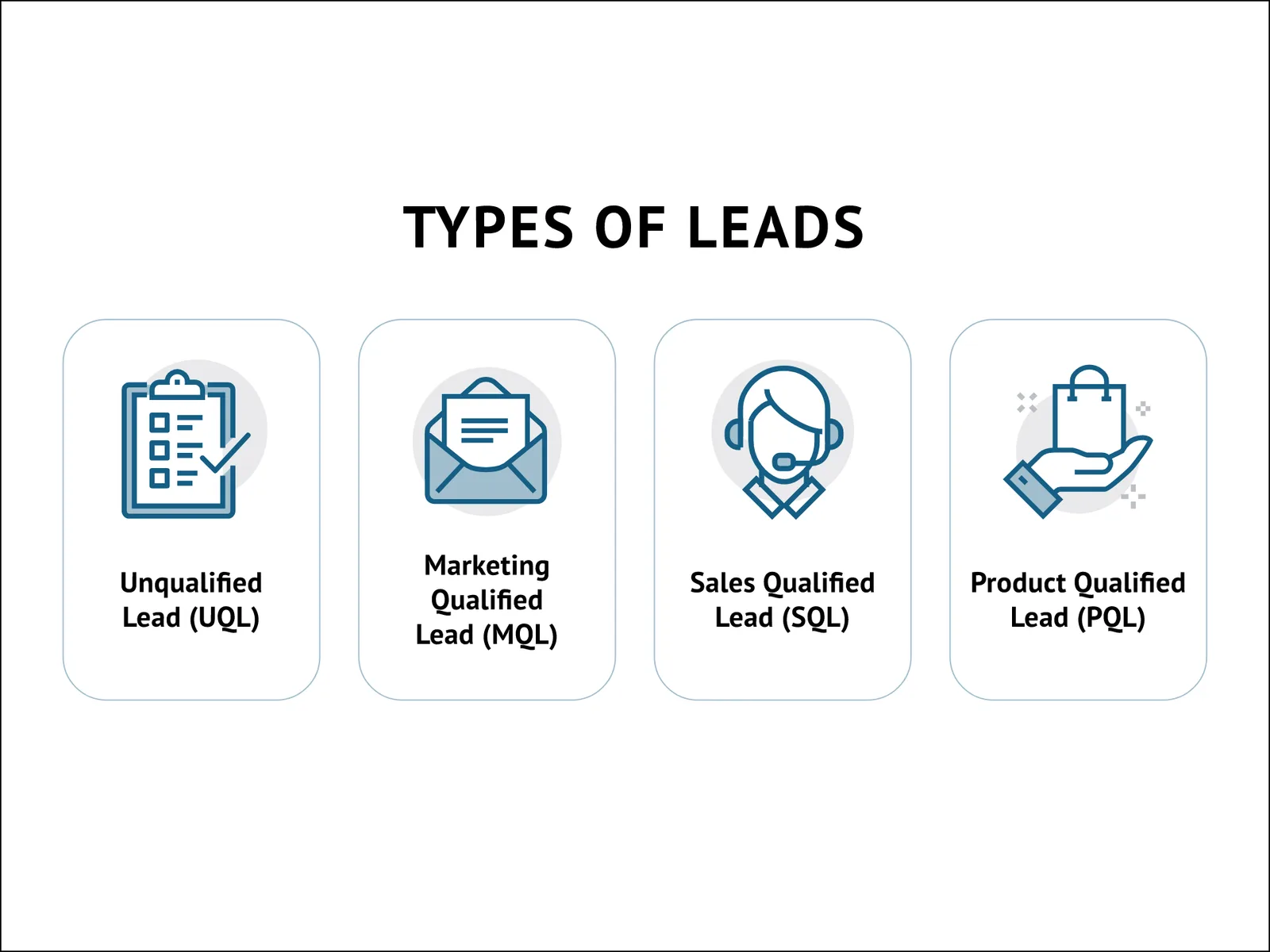
Image Sourced From | Fit Small Business
What Types of Leads are There?
Marketing Qualified Lead (MQL)
A Marketing Qualified Lead (MQL) is an individual who has engaged with your marketing efforts but isn't ready to make a purchase yet. They have shown interest through actions like downloading a free resource, attending a webinar, or filling out a form. MQLs are nurtured through targeted marketing strategies until they are ready to be passed to the sales team.
To manage MQLs effectively, tools like HubSpot and Marketo can be very useful as they allow you to track and score leads based on their behaviour and engagement with your content.
Sales Qualified Lead (SQL)
A Sales Qualified Lead (SQL) is a potential customer who has been researched and vetted by the marketing team and is deemed ready for the sales team to approach. SQLs have shown intent to purchase and are more likely to convert into paying customers. They might have requested a demo, inquired about pricing, or shown other strong buying signals.
Effective management of SQLs often involves CRM systems like Salesforce or Pipedrive, which help sales teams keep track of their leads and interactions, ensuring that no opportunities are missed.
Product Qualified Lead (PQL)
A Product Qualified Lead (PQL) is someone who has used your product and has taken actions that suggest they are interested in becoming a paying customer. PQLs are common in freemium models where users can try out a basic version of the product before deciding to upgrade.
Tracking PQLs can be efficiently managed with tools like Mixpanel or Amplitude, which allow you to monitor user interactions with your product and identify those who are ready to upgrade.
Service Qualified Lead
A Service Qualified Lead is a customer who has indicated that they are interested in a specific service you offer. This type of lead is often identified by customer service teams and then directed to the appropriate sales or support resources. For example, a customer who contacts your support team asking about a specific service upgrade is a Service Qualified Lead.
Utilising tools like Zendesk or Freshdesk can help in identifying and managing these leads effectively by integrating customer service interactions with your CRM.
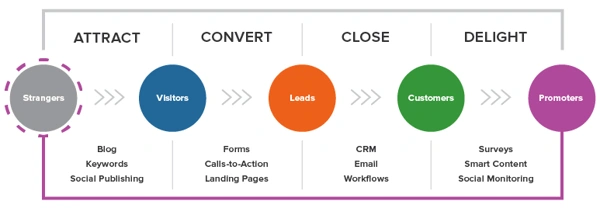
Image Sourced From | Hubspot
What is Lead Generation?
Lead generation is the strategic process of attracting and capturing potential customers' interest in a product or service with the objective of converting that interest into a sale. In the realm of online marketing, this often involves enticing visitors to share their contact information (known as a “lead”) through a web form, usually in exchange for valuable content like ebooks, webinars, or newsletters.
This process allows businesses to build a pipeline of prospective customers, enabling them to engage, nurture, and guide these leads through the sales funnel. Effective lead generation not only drives sales growth but also helps businesses understand customer needs and behaviours, allowing for more targeted and effective marketing strategies.
By leveraging tools such as SEO, content marketing, social media, and email campaigns, businesses can attract high-quality leads and foster long-term customer relationships.
Why is lead generation important?
Lead generation is crucial for several reasons:
Identifying Potential Customers: It helps in finding people who are interested in what you offer, which is the first step in the sales process.
Building Relationships: Engaging with leads through various touchpoints allows you to build trust and rapport, which is essential for converting leads into customers.
Increasing Sales: By nurturing leads and guiding them through the sales funnel, you can convert them into paying customers, directly impacting your revenue.
Growing Your Business: A steady stream of leads can lead to consistent sales and revenue growth, ensuring the long-term success of your business.
Why do you need to improve your lead generation?
When someone is scouring the internet and shows organic interest in your business the relationship between your company and the stranger is much stronger.
When someone shows an organic interest in your business, the transition from stranger to customer is much more natural. You can improve the customer conversion process through the use of inbound marketing. This strategy is designed to attract loyal customers by catering to the needs of your target audience.
The heart of an inbound marketing approach is to provide valuable content that creates customised marketing experiences, thereby boosting customer engagement and business expansion.
Lead generation is an essential phase within the inbound marketing framework. It happens after you have successfully drawn in an audience and are set to convert those visitors into prospects for your sales team.
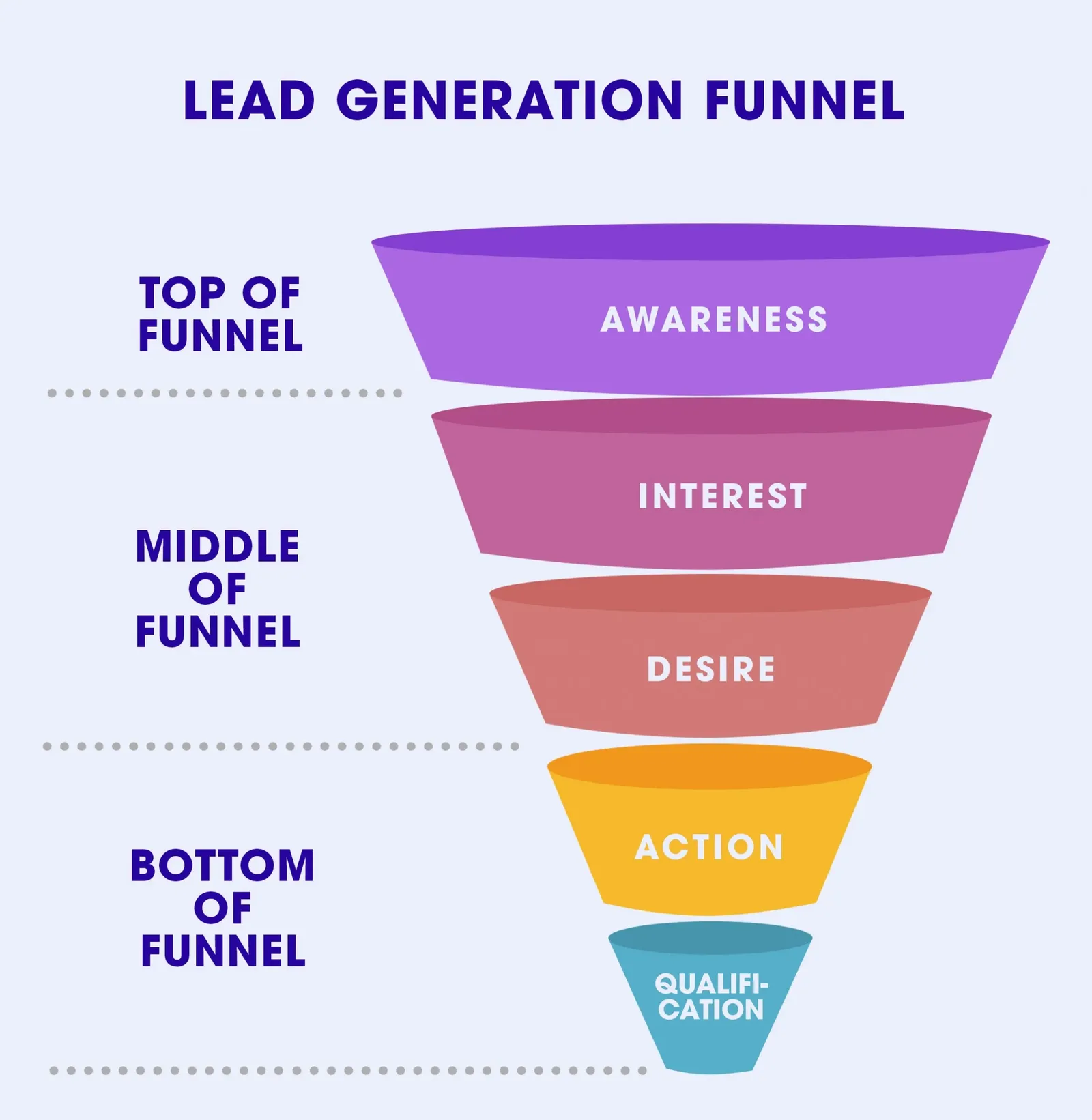
Image Sourced From | Icegram
Creating an Effective Lead Generation Funnel
An effective lead generation funnel is the cornerstone of a successful marketing strategy. It systematically guides potential customers from initial awareness through to making a purchase and beyond, ensuring a seamless journey that maximises conversion rates. Let's delve deeper into each stage of the funnel, exploring specific tactics and tools that can enhance your lead generation efforts.
1. Awareness
Goal: Attract potential customers and make them aware of your brand and offerings.
Strategies:
Content Marketing: Create valuable and relevant content such as blog posts, infographics, videos, and ebooks that address your audience's pain points and interests.
SEO (Search Engine Optimisation): Optimise your website and content for search engines to improve visibility and attract organic traffic. Tools like Ahrefs, SEMrush, and Moz can help identify high-value keywords and track your SEO performance.
Social Media Marketing: Use platforms like Facebook, Twitter, LinkedIn, and Instagram to share content, engage with your audience, and run targeted ad campaigns. Social media management tools like Hootsuite and Buffer can streamline your efforts.
Example: A software company might publish a series of blog posts addressing common industry challenges, using SEO techniques to ensure these posts rank well in search engine results.
2. Interest
Goal: Engage prospects by providing valuable information that resonates with their needs and interests.
Strategies:
Email Marketing: Send targeted and personalised emails to prospects, offering them additional content, product information, and updates. Platforms like Mailchimp and ActiveCampaign enable you to segment your audience and automate email campaigns.
Lead Magnets: Offer free resources such as ebooks, whitepapers, webinars, and case studies in exchange for contact information. This not only builds your email list but also positions you as a valuable resource.
Social Media Engagement: Interact with your audience through comments, messages, and live sessions. This builds a relationship and keeps your brand top-of-mind.
Example: Following up on blog posts, the software company might offer a free webinar on optimising business processes using their software, requiring attendees to register with their email addresses.
3. Consideration
Goal: Provide in-depth content and solutions that address the specific needs and pain points of your prospects, helping them evaluate your offerings.
Strategies:
Case Studies and Testimonials: Showcase success stories and testimonials from satisfied customers to build credibility and trust. Highlight how your product or service has resolved similar challenges faced by other customers.
Product Demos and Trials: Offer free trials or live demonstrations of your product. This allows prospects to experience the value of your offering firsthand. Tools like Calendly can facilitate scheduling demos.
Detailed Guides and Comparison Charts: Create comprehensive guides and comparison charts that help prospects understand the benefits of your product compared to competitors.
Example: The software company provides in-depth case studies demonstrating how their software improved efficiency and reduced costs for various clients, alongside offering a free trial of their software.
4. Intent
Goal: Encourage prospects to take concrete actions that indicate their readiness to purchase.
Strategies:
Clear Calls to Action (CTAs): Ensure your website and emails have clear, compelling CTAs that guide prospects toward the next step, whether it's scheduling a demo, signing up for a trial, or contacting sales.
Retargeting Ads: Use retargeting ads to re-engage visitors who have shown interest but haven't yet converted. Platforms like Google Ads and Facebook Ads offer powerful retargeting options.
Lead Scoring: Implement a lead scoring system to prioritise prospects based on their engagement level and likelihood to convert. CRM tools like Salesforce and HubSpot can automate this process.
Example: The software company uses retargeting ads to remind visitors who signed up for a webinar but didn't attend, offering them another chance to watch the recording and try the software.
5. Decision
Goal: Convert leads into paying customers through targeted sales efforts.
Strategies:
Sales Follow-Up: Have your sales team follow up with high-scoring leads to answer any remaining questions and close the deal. CRM systems like Pipedrive or Zoho CRM can help manage and track these interactions.
Special Offers and Discounts: Provide limited-time offers or discounts to encourage immediate action. Ensure these are communicated clearly in your follow-up communications.
Customer Support: Offer excellent pre-sale customer support to address any concerns or objections prospects might have.
Example: The software company's sales team reaches out to trial users with personalised offers and provides comprehensive support to address any last-minute concerns, facilitating the conversion process.
6. Retention
Goal: Maintain relationships with customers to encourage repeat business, referrals, and long-term loyalty.
Strategies:
Onboarding and Training: Provide thorough onboarding and training to help new customers get the most out of your product. Tools like Loom for video tutorials and Intercom for in-app guidance can be very effective.
Regular Check-Ins: Schedule regular check-ins to gather feedback and address any issues. This demonstrates your commitment to customer success.
Loyalty Programs and Upsells: Implement loyalty programs to reward repeat customers and identify opportunities for upselling or cross-selling additional products or services.
Example: The software company offers a series of onboarding webinars and personal training sessions for new customers, followed by quarterly check-ins to ensure satisfaction and explore opportunities for upselling advanced features.
By meticulously addressing each stage of the lead generation funnel with tailored strategies and tools, you can effectively guide prospects from awareness to loyalty, maximising your conversion rates and fostering long-term customer relationships.

Tips For Large and Small Businesses
Small businesses
Small businesses can benefit from cost-effective lead generation strategies that focus on building relationships and providing value. Some effective tactics include:
Content Marketing: Creating valuable blog posts, ebooks, and whitepapers. For instance, writing detailed guides or how-to articles that address common pain points of your target audience.
Social Media Engagement: Building a community on platforms like Facebook, Instagram, and LinkedIn. Engaging with followers by responding to comments, running contests, and sharing user-generated content can significantly boost your visibility.
Email Marketing: Sending targeted email campaigns to nurture leads. Tools like ConvertKit and Mailchimp can help you segment your audience and send personalised emails that cater to their specific needs.
Networking: Attending industry events and joining local business groups. Participating in local business networks or online forums related to your industry can help you connect with potential leads and build relationships.
Large businesses
Large businesses often have more resources to invest in sophisticated lead generation strategies. These can include:
Account-Based Marketing (ABM): Targeting high-value accounts with personalised marketing efforts. ABM platforms like Demandbase and Terminus can help you create tailored campaigns for specific accounts.
Marketing Automation: Using tools to automate and scale marketing campaigns. Platforms like HubSpot and Marketo offer comprehensive automation solutions that can streamline your lead generation efforts.
Webinars and Online Events: Hosting educational events to engage and convert leads. Tools like Zoom and GoToWebinar can help you organise and promote webinars that attract a large audience.
Influencer Partnerships: Collaborating with industry influencers to reach a wider audience. Influencer marketing platforms like AspireIQ and Traackr can help you find and manage influencer partnerships.
B2B and B2C Lead Generation
B2B Tips
B2B lead generation requires a strategic approach to attract and engage other businesses. Here are some effective tips:
LinkedIn Marketing: Leverage LinkedIn for networking and content sharing. Regularly posting updates, participating in relevant groups, and utilising LinkedIn's advertising options can help you reach a professional audience. LinkedIn is an ideal platform for B2B lead generation because it allows you to connect directly with decision-makers.
Case Studies and Testimonials: Showcase successful projects to build credibility. Detailed case studies that highlight your successes can be powerful tools for convincing potential leads of your capabilities. Testimonials from satisfied clients can also provide social proof and boost your reputation.
Industry-Specific Content: Create content that addresses the unique challenges of your target industries. This could include industry reports, whitepapers, and blog posts that provide valuable insights and solutions. By tailoring your content to specific industries, you demonstrate your expertise and relevance to potential leads.
Email Outreach: Personalise emails to connect with decision-makers. A well-crafted email campaign that speaks directly to the recipient's needs can significantly increase engagement and response rates. Personalisation can include addressing the recipient by name, referencing their company, and offering solutions to their specific pain points. Automating and optimising your email outreach can further enhance effectiveness.
Webinars and Virtual Events: Host webinars and virtual events to provide valuable information and engage with potential leads in real-time. These events can position your company as a thought leader and offer an opportunity for interactive engagement with your audience.
Partnerships and Alliances: Form strategic partnerships with other businesses that complement your services. These alliances can help you access a broader audience and generate high-quality leads through referrals.
B2C Tips
B2C lead generation focuses on attracting individual consumers. Here are some key strategies:
Social Media Advertising: Run targeted ads on platforms like Facebook, Instagram, and Twitter. These platforms offer sophisticated targeting options that allow you to reach your ideal customers based on their interests, behaviours, and demographics. Effective social media advertising can significantly increase your brand's visibility and attract potential leads.
Contests and Giveaways: Engage potential customers with exciting offers. Running contests and giveaways can generate a lot of interest and attract a large number of leads quickly. These campaigns can also increase your social media following and boost engagement with your brand.
Influencer Marketing: Partner with influencers to promote your products. Influencers can help you reach a larger audience and build trust with potential customers. By collaborating with influencers who align with your brand, you can leverage their credibility and reach to generate leads.
SEO and Content Marketing: Create blog posts, videos, and other content that attracts and informs your audience. High-quality content that answers your audience's questions and solves their problems can attract organic traffic and generate leads. Optimising your content for search engines ensures that it reaches a wider audience.
Referral Programs: Implement referral programs to encourage your existing customers to refer new leads. Offering incentives for referrals can motivate your customers to spread the word about your products or services, leading to an increase in high-quality leads.
Personalised Offers and Discounts: Use personalised marketing techniques to offer tailored discounts and special offers to your leads. Personalisation can increase engagement and conversion rates by making your offers more relevant to the individual recipient.
4 Ways You Can Improve Your Lead Gen
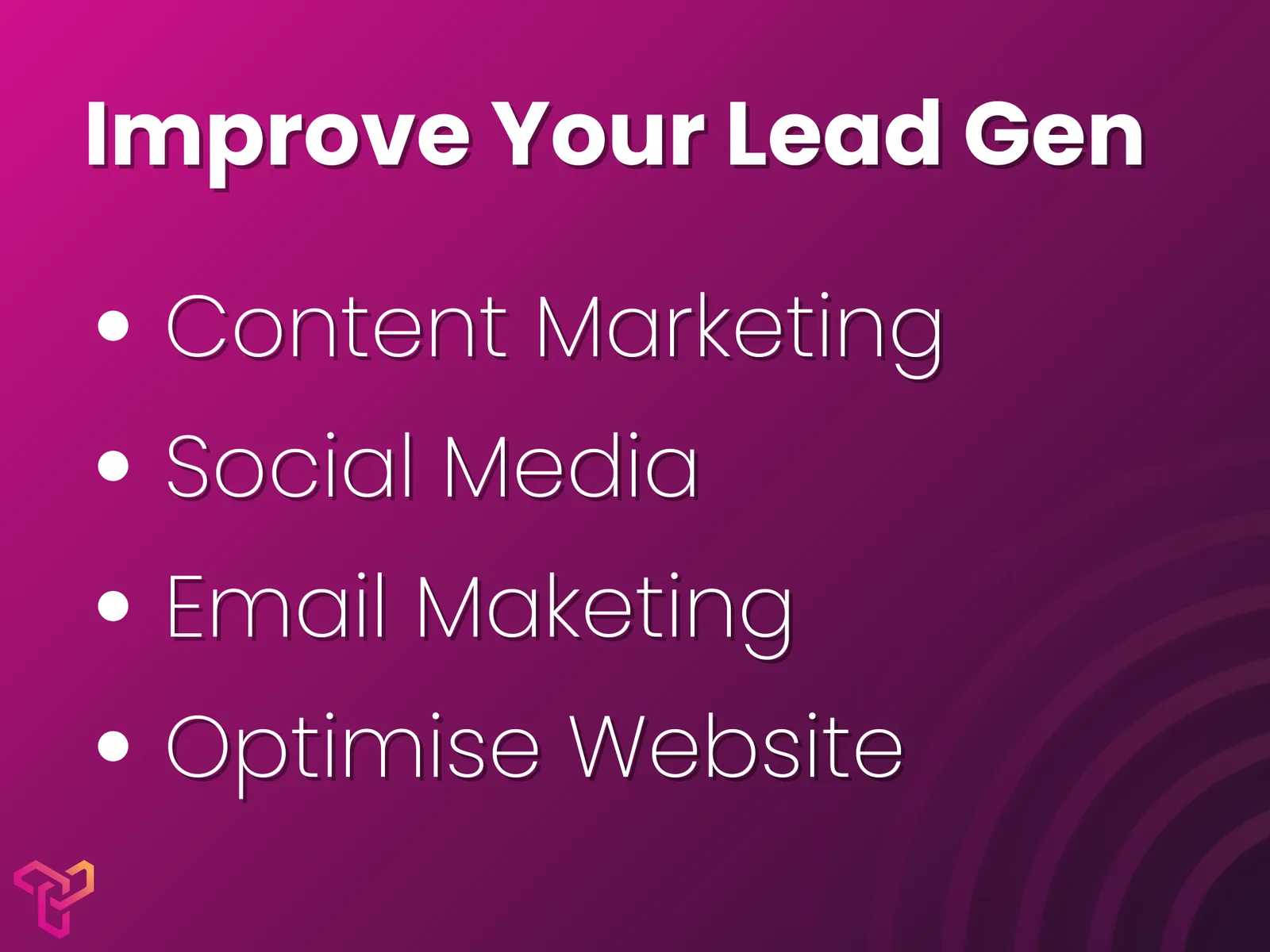
As we discussed marketing correctly is a key way in which you can start to attract, nurture and ultimately close these leads. Why'll some companies do crazy campaigns and wacky inbound efforts. I like to take it back to the basics.
The Role of Content Marketing
Content marketing plays a pivotal role in lead generation by providing valuable information that attracts and engages potential customers. Here are some key strategies:
Blogging
Writing informative, SEO-optimised blog posts can significantly enhance your visibility and establish your authority in your industry. Regularly updating your blog with high-quality content keeps your audience engaged and drives organic traffic to your site.
Ebooks and Whitepapers
Offering in-depth resources in exchange for contact information can help capture high-quality leads. These long-form content pieces position your brand as a thought leader and trusted resource.
Videos:
Creating engaging video content that educates and entertains can reach a wider audience. Videos are highly shareable and can effectively communicate complex information in an accessible way, making them an excellent tool for lead generation.
Infographics
Using visual content to convey complex information quickly and clearly is highly effective. Infographics are particularly good for sharing on social media and can drive significant traffic to your website.
Social Media Techniques
Social media is a powerful tool for lead generation and is extremely cheap and effective. You need to be getting these right, so if your aren't you better start.
Regular Posting
Sharing valuable content consistently keeps your audience engaged and attracts new followers. Use a mix of posts, including images, videos, and articles, to keep your content diverse and engaging.
Engaging with Followers
Responding promptly to comments and messages creates a sense of community and trust. Interact with your audience, answer their questions, and show that you value their input.
Running Ads
Creating targeted ad campaigns on social media platforms can significantly expand your reach. These ads allow you to target specific demographics, interests, and behaviours, ensuring your content reaches the right audience.
Hosting Live Sessions
Engaging your audience through live Q&A sessions and webinars can foster a deeper connection. These live interactions provide immediate value and can help build a loyal following.
Email Marketing Tactics
Email marketing remains one of the most effective lead generation tools. Key tactics include:
Segmentation
Divide your email list into smaller segments for targeted campaigns. This allows you to send more relevant content to each group, increasing engagement and conversion rates.
Personalisation
Customise emails to address the recipient by name and address their specific needs. Personalised emails are more likely to be opened and acted upon.
Automated Workflows
Set up automated email sequences to nurture leads. Automated workflows ensure that your leads receive timely and relevant information, keeping them engaged throughout the buyer’s journey.
A/B Testing
Experiment with different subject lines, content, and calls to action to optimise performance. A/B testing helps you determine what works best for your audience and continuously improve your email campaigns.
Optimising Your Website
Your website is the heart of your online presence and a crucial component of your lead generation strategy.
Think of it as your digital storefront—first impressions matter, and a well-optimised site can make all the difference in converting visitors into leads.
Improve Loading Speed: Ensure your site loads quickly to prevent visitor drop-off. Faster websites provide a better user experience and are favoured by search engines.
Enhance User Experience (UX): Make navigation intuitive and user-friendly. A well-designed site keeps visitors engaged and makes it easier for them to find what they’re looking for.
Use Clear Calls to Action (CTAs): Guide visitors towards desired actions, such as signing up or making a purchase. Effective CTAs are clear, concise, and compelling.
Implement Lead Capture Forms: Place forms strategically throughout your site to collect visitor information. Lead capture forms should be easy to fill out and positioned where they’re most likely to be seen.
Using SEO Effectively
Search engine optimisation (SEO) is essential for driving organic traffic to your site.
If done right, SEO can significantly boost your visibility and attract a steady stream of potential customers. Let’s break down some of the most effective SEO strategies to help you get there.
First off, you need to get savvy with keyword research. This is about identifying and targeting the right keywords—those terms your audience is typing into search engines. By understanding what they’re searching for, you can create content that meets their needs and ranks well in search results. Tools like Google Keyword Planner or Ahrefs can be incredibly helpful here.
Next, focus on on-page SEO. This involves optimising your title tags, meta descriptions, and the content on your site. On-page SEO makes your site easy for search engines to understand, helping it rank higher in search results. Ensure your keywords are naturally integrated into your content and metadata without keyword stuffing.
Backlink building is another crucial aspect. Backlinks are like votes of confidence from other websites. When reputable sites link back to your content, it signals to search engines that your site is credible and valuable. Aim to acquire high-quality backlinks through guest blogging, partnerships, and by creating shareable content that others want to link to.
Don’t forget about content updates. SEO isn’t a one-and-done deal. Regularly refreshing your content keeps it relevant and useful. Update old blog posts with new information, add recent statistics, or improve readability. This not only enhances user experience but also signals to search engines that your site is up-to-date.
In summary, effective SEO is about making your site visible, credible, and relevant. Here’s a quick rundown of the key strategies:
Keyword Research: Identify and target relevant keywords. Understanding what your audience is searching for helps you create content that meets their needs.
On-Page SEO: Optimise title tags, meta descriptions, and content. Proper on-page SEO ensures that your site is easily understood by search engines and ranks higher in search results.
Backlink Building: Acquire high-quality backlinks from reputable sites. Backlinks act as endorsements, boosting your site's credibility and ranking.
Content Updates: Regularly refresh your content to keep it relevant. Updating old content with new information keeps it useful and improves its performance in search engines.
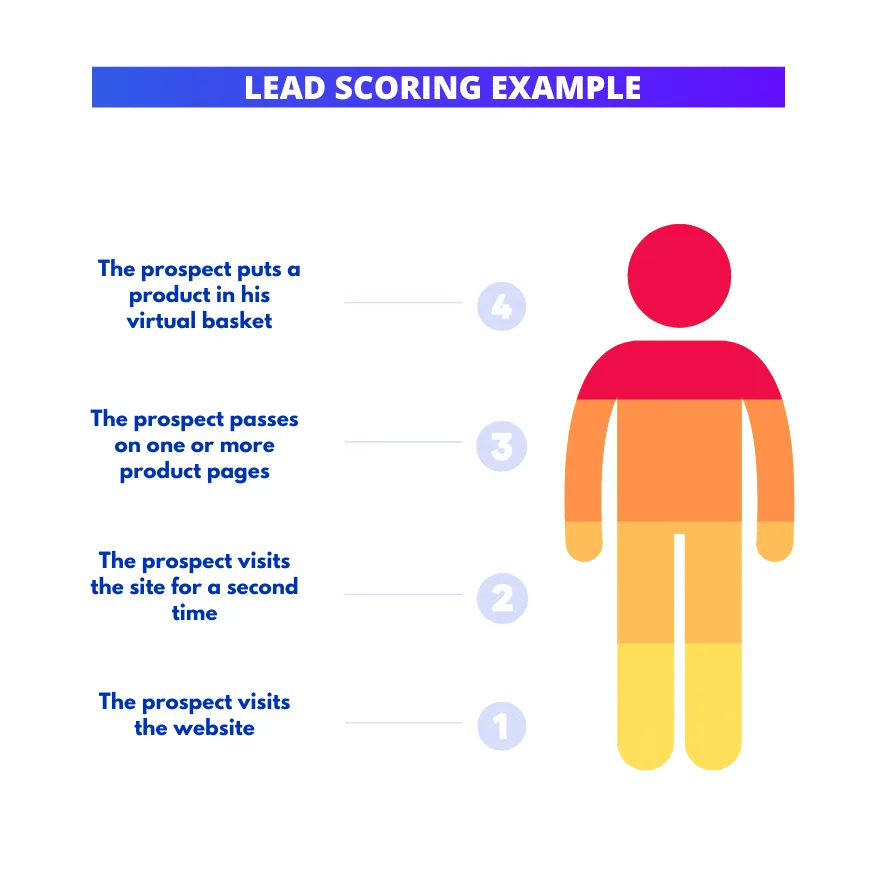
Image Sourced From | Waalaxy
How to Lead Score and Improve Sales Efficiency
Lead scoring is a crucial method for prioritising leads based on their likelihood to convert, thereby enhancing sales efficiency by directing efforts towards the most promising prospects. Here’s how you can effectively implement lead scoring:
- Defining Criteria: Establish clear and specific criteria for scoring leads. Consider factors such as engagement level, demographics, behaviour, and interaction history. For instance, downloading a whitepaper or attending a webinar can be indicators of higher interest and engagement.
- Assigning Scores: Develop a points-based system to rate leads according to their actions and characteristics. Assign higher scores to actions that indicate a stronger buying intent, such as requesting a demo or repeated website visits.
- Automating the Process: Utilize CRM tools to automate the lead scoring process. These tools can track and score leads in real-time based on the predefined criteria, ensuring that no potential lead is overlooked. Automation helps in maintaining consistency and efficiency.
- Regularly Reviewing and Adjusting: Continuously monitor and refine your lead scoring model. Analyze performance data to identify trends and make necessary adjustments. Regular reviews ensure that your scoring criteria remain relevant and accurately reflect the leads' potential to convert.
By implementing these steps, you can ensure that your sales team focuses on the most valuable leads, thereby improving conversion rates and overall sales efficiency.

Future Trends in Lead Generation
Staying ahead of future trends is crucial for maintaining a competitive edge in lead generation. Emerging trends include:
AI and Machine Learning: Using advanced technologies to automate and optimise lead generation efforts.
Sales Triggers: Delivering highly personalised outreach with pre-intent data.
Interactive Content: Engaging leads with interactive elements like quizzes and polls.
Voice Search Optimisation: Adapting content for voice search queries.
Shift From Free PDF to Free Access
In the past, offering free resources like information-packed PDFs, ebooks, or whitepapers was a staple of lead generation strategies.
While these methods still have value, the landscape of digital marketing has evolved significantly. Today, potential customers expect more immediate and interactive experiences.
Simply providing downloadable content is no longer enough to capture and maintain their interest.
Instead, offering a section of your platform for free right on your website has become a more effective way to generate leads and engage users.
Why the Old Methods Are Losing Effectiveness
Decreasing Engagement: The market is saturated with free PDFs and ebooks. Users have grown accustomed to these offers and often ignore them due to information overload. They are less likely to provide their contact information in exchange for yet another downloadable resource.
Lack of Instant Gratification: In our fast-paced digital world, users seek instant solutions and gratification. Waiting to download a PDF and then reading through it may seem too slow and cumbersome compared to interactive, real-time experiences.
Limited Interaction: PDFs and static content lack the interactive elements that can engage users and keep them on your site longer. Interactive content, such as live demos or trial access, can provide a more compelling user experience.
The New Approach: Free Access to Your Platform
Instant Value: Offering a free section of your platform, such as a trial version, free tools, or limited access to premium features, provides immediate value. Users can experience firsthand what your platform offers, which can significantly increase their interest and investment in your product.
Engagement and Interaction: Free access allows users to interact with your platform in real-time. This interaction not only keeps users engaged longer but also provides you with valuable insights into their behaviour and preferences.
Building Trust: By giving potential customers a taste of your platform without any initial cost, you build trust and credibility. They can see the quality and benefits of your offering, making them more likely to convert to paying customers.
Higher Conversion Rates: Users who have already interacted with your platform and found it useful are more likely to upgrade to a paid version. This approach often results in higher conversion rates compared to traditional lead magnets.
Common Mistakes to Avoid in Your Lead Generation Campaign
Avoiding common mistakes can significantly enhance the success of your lead generation efforts. Here are some key pitfalls to watch out for:
Neglecting to Define Your Target Audience: Failing to identify and understand your ideal customers can lead to ineffective campaigns. Create detailed buyer personas to tailor your messages and offers effectively.
Overlooking Content Quality: Producing low-quality content that fails to engage or inform can harm your reputation and lead generation efforts. Ensure your content is well-researched, professionally written, and adds real value.
Ignoring Mobile Optimisation: Not ensuring your website and content are mobile-friendly can result in a poor user experience and lost leads. Make sure your site is responsive and performs well on all devices.
Failing to Nurture Leads: Capturing leads is only half the battle. Use email marketing, personalised follow-ups, and targeted content to guide leads through the sales funnel.
Not Using Analytics: Failing to track and analyse your lead generation efforts can leave you in the dark about what's working. Use analytics tools to monitor performance and make data-driven decisions.
Overcomplicating Forms: Lengthy and complex lead capture forms can deter potential leads. Keep your forms simple and only ask for essential information to increase form completions.
By avoiding these common mistakes, you can significantly improve the effectiveness of your lead generation campaigns and ensure better results.