SaaS Demand Generation: What It Is and How to Actually Do It
SaaS demand generation creates awareness and desire before buyers search. Learn the signal-based approach modern B2B teams use to build pipeline.

Demand generation creates 3x more pipeline than outbound at 62% lower cost - yet most SaaS teams confuse it with lead generation and wonder why their funnel is leaking.
This guide breaks down what SaaS demand generation actually is, how it differs from lead gen, and the signal-based approach that is changing how B2B teams build pipeline.
What is SaaS Demand Generation?
SaaS demand generation is the process of creating awareness and desire for your product in buyers who are not actively searching for it yet.
It is the reason someone says "oh yeah, I have heard of them" when your company comes up in conversation. It is the brand recognition that turns a cold outreach into a warm reply.
For SaaS specifically, demand gen matters because:
Sales cycles are long. Enterprise B2B deals take 3-9 months. You need to be known before the buying process starts.
Categories are crowded. There are 30+ tools in most SaaS categories. The company with the strongest brand awareness gets on the shortlist first.
Buyers self-educate. Research from Forrester shows 70% of the B2B buying journey happens before a prospect talks to sales. Your content is your first salesperson.
Demand Generation vs Lead Generation
These are not the same thing, and mixing them up is expensive.
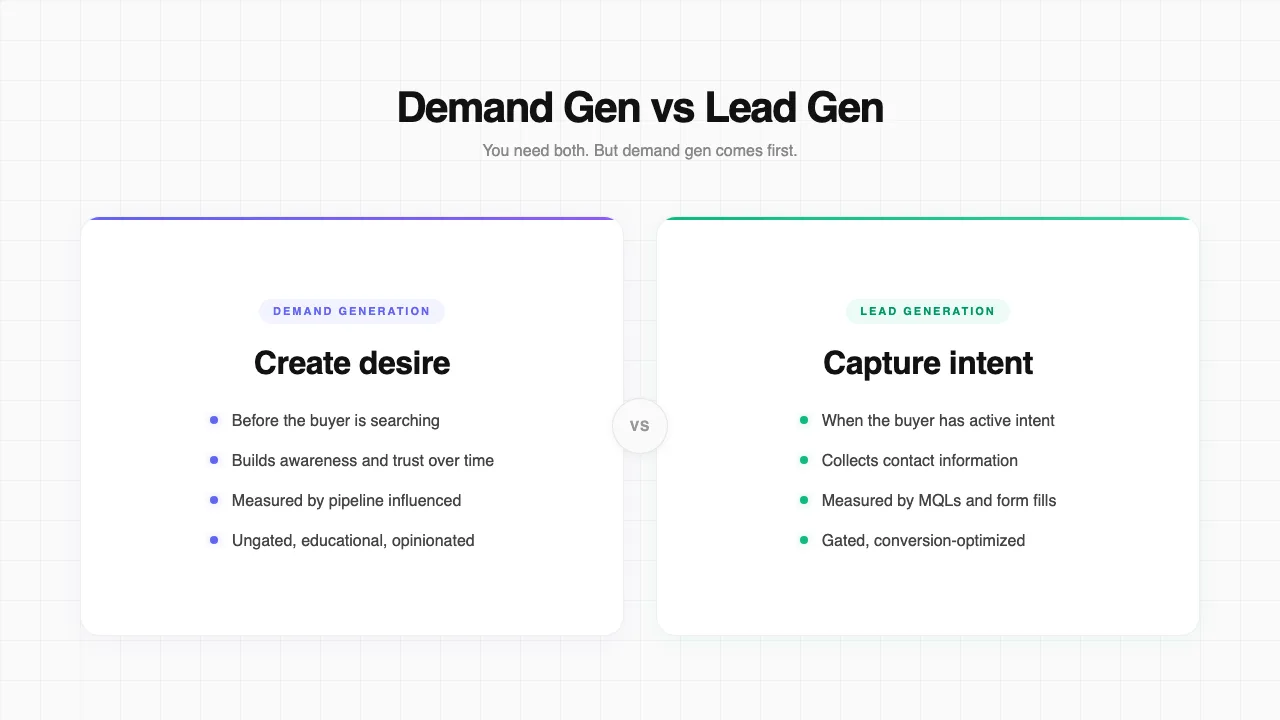
The old playbook: Gate content, collect emails, score leads, pass to sales, watch conversion rates flatline.
What works now: Create value publicly, build awareness through content and community, capture intent signals when buyers engage, activate with warm relevant outreach.
Lead gen without demand gen means you are collecting contacts who do not care. Demand gen without lead gen means you are building awareness you cannot convert. You need both - but demand gen comes first.
The Signal-Based Approach
Most demand gen advice stops at channels: run LinkedIn ads, publish blog posts, host webinars. That is the what. The missing piece is the who and the when.
Signal-based demand generation adds two layers:
Signals in (what to create): Social listening tools monitor what your ICP is talking about - the questions they ask, the competitors they mention, the pain points they share publicly. This replaces guesswork with real data. Instead of brainstorming content topics in a vacuum, you are responding to actual demand signals.
Signals out (who to activate): When someone engages with your content - likes a post, comments on an article, attends a webinar - that is an intent signal. Track it. Enrich it. Route it to sales. The difference between cold outreach and warm outreach is whether the prospect has seen your name before.
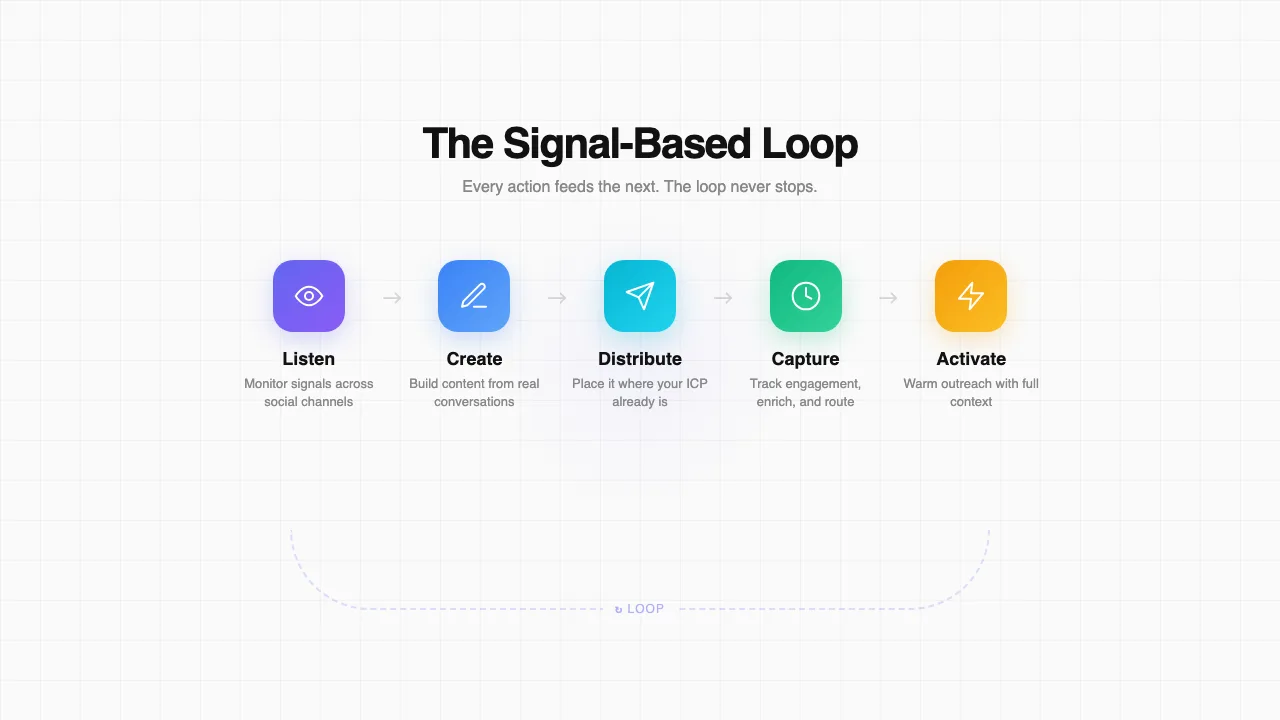
Tools like Trigify sit at this intersection: monitoring social platforms for relevant signals, capturing engagement data, enriching profiles, and triggering outreach workflows automatically. The result is a demand gen engine that both creates and captures demand in one loop.
5 Tactics That Work for SaaS Demand Gen
- Content sourced from real conversations. Pull questions from sales calls, support tickets, and social listening. Write about what your buyers actually ask, not what you think they should care about.
- Social listening for content gaps. Monitor what your competitors' audiences are saying. When someone complains about a competitor's pricing or limitations, that is a content opportunity. When a trending topic gets 50+ comments, that is your next post. Here is our guide on the best social listening tools for B2B.
- Community presence over broadcasting. Be in the conversations, not just publishing into the void. LinkedIn engagement on thought leader posts, Reddit threads in your niche, and Slack communities where your ICP hangs out. Visibility compounds.
- Co-marketing with complementary tools. Joint webinars, guest posts, and integration announcements with tools your audience already uses (Clay, HeyReach, Smartlead, HubSpot). You borrow their audience; they borrow yours.
- Signal-based outreach. When someone engages with your content 3-5 times, they are warmed up. Outreach at that point converts at 5x the rate of cold email because they already know your name.
Measuring Demand Gen Without Vanity Metrics
Forget MQLs from gated PDFs. Track these instead:
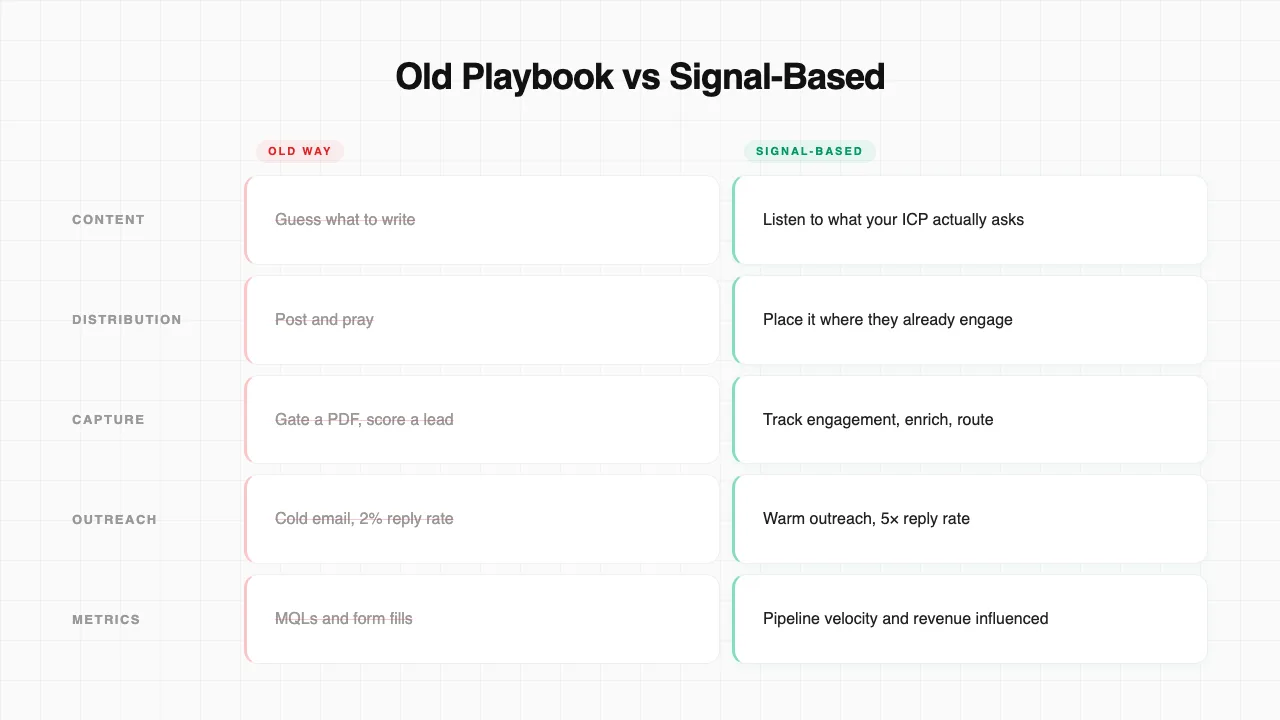
- Pipeline influenced. How much revenue touched a demand gen asset at any point in the buyer journey?
- Engagement-to-meeting rate. Of the people who engaged with your content, how many booked a demo?
- Time from first touch to demo. Is demand gen shortening the sales cycle?
- Organic branded search. Are more people searching for your company name? That is demand gen working.
If you cannot tie an activity to pipeline, question whether it belongs in your demand gen budget.
Getting Started: 3 Steps
- Audit your current content. Is it answering real questions your buyers ask, or is it content for content's sake? Pull your last 10 sales call transcripts and list the top 5 questions. If your blog does not answer them, start there.
- Set up social listening. Monitor your brand name, your competitors, and 3-5 keywords your ICP cares about. You will spot content gaps and warm leads within the first week. Here is how brand monitoring works if you are unsure where to start.
- Close the loop. Connect your content engagement data to your outreach. When someone engages multiple times, route them to sales with context, not a cold template.
Want to see how signal-based demand gen works in practice? Join the Social Signal Newsletter for weekly insights on turning social engagement into pipeline.